About Rainbow Vote
Ahead of India’s 2024 Lok Sabha elections, The Garv Project launched Rainbow Vote, a voter-awareness initiative focused on LGBTQ+ rights and political accountability.
The initiative grew from a simple observation: while LGBTQ+ rights had become an increasingly important part of India’s legal and public debate, voters had limited visibility into where their elected representatives actually stood.
Rainbow Vote sought to help close that gap by collecting and organizing publicly available information on political parties and elected representatives, including public statements, parliamentary interventions, and positions on LGBTQ+ issues. The goal was simple: make political positions more visible and, in doing so, strengthen political accountability.
Why it mattered
For decades, progress on LGBTQ+ rights in India has been driven substantially through the courts and civil society. But the Supreme Court’s 2023 decision on marriage equality reinforced that many of the next questions facing the community would also require action through Parliament and elected government.
Rainbow Vote therefore sought to bring political representatives more clearly into the conversation—and give voters a better understanding of how those seeking to represent them were engaging with LGBTQ+ rights.
What we learned
As we examined political positions more closely, a more complicated picture emerged. Many politicians could not easily be classified as simply supportive or opposed. Instead, we found patterns of symbolic support, selective engagement, procedural deflection, and silence.
That insight ultimately changed the direction of The Garv Project. What began as an effort to make political positions more visible evolved into an effort to understand why politicians take the positions they do, how political incentives shape their willingness to engage, and where meaningful political movement may realistically be possible.
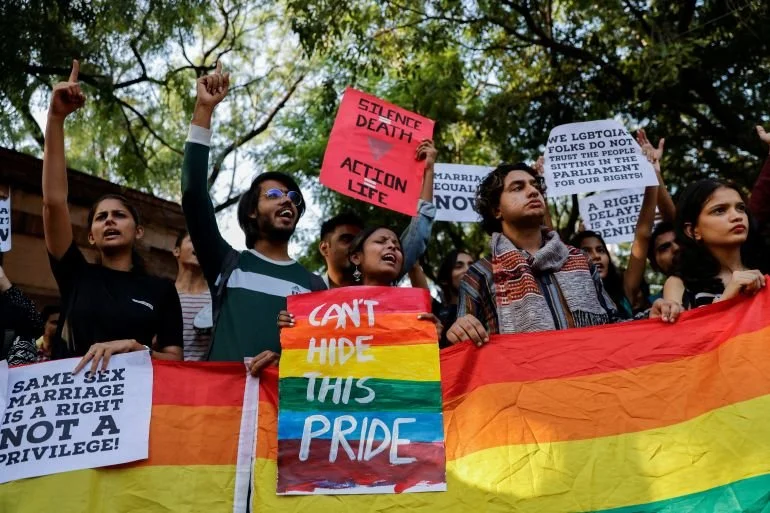
Image from: Al Jazeera, 2023